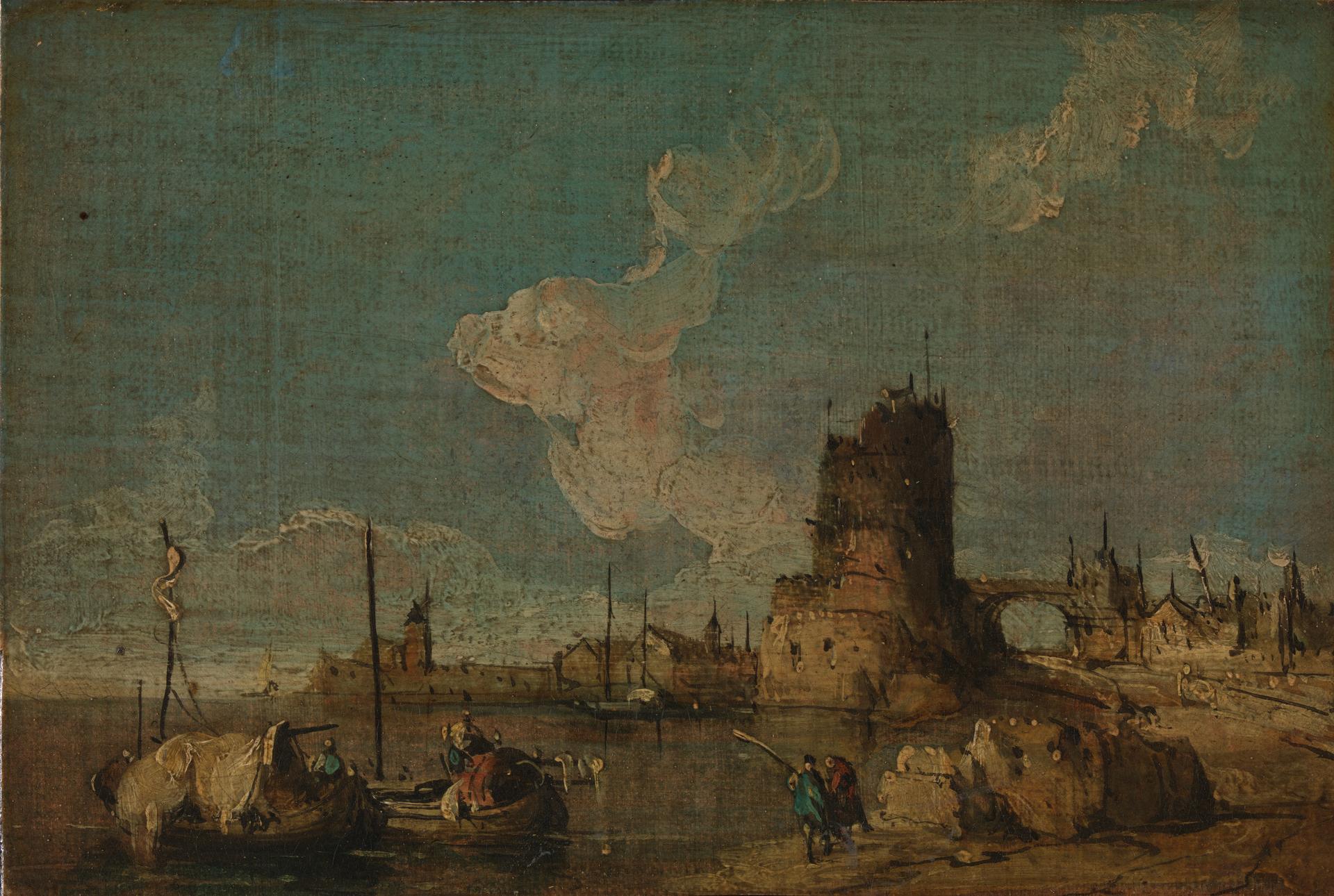
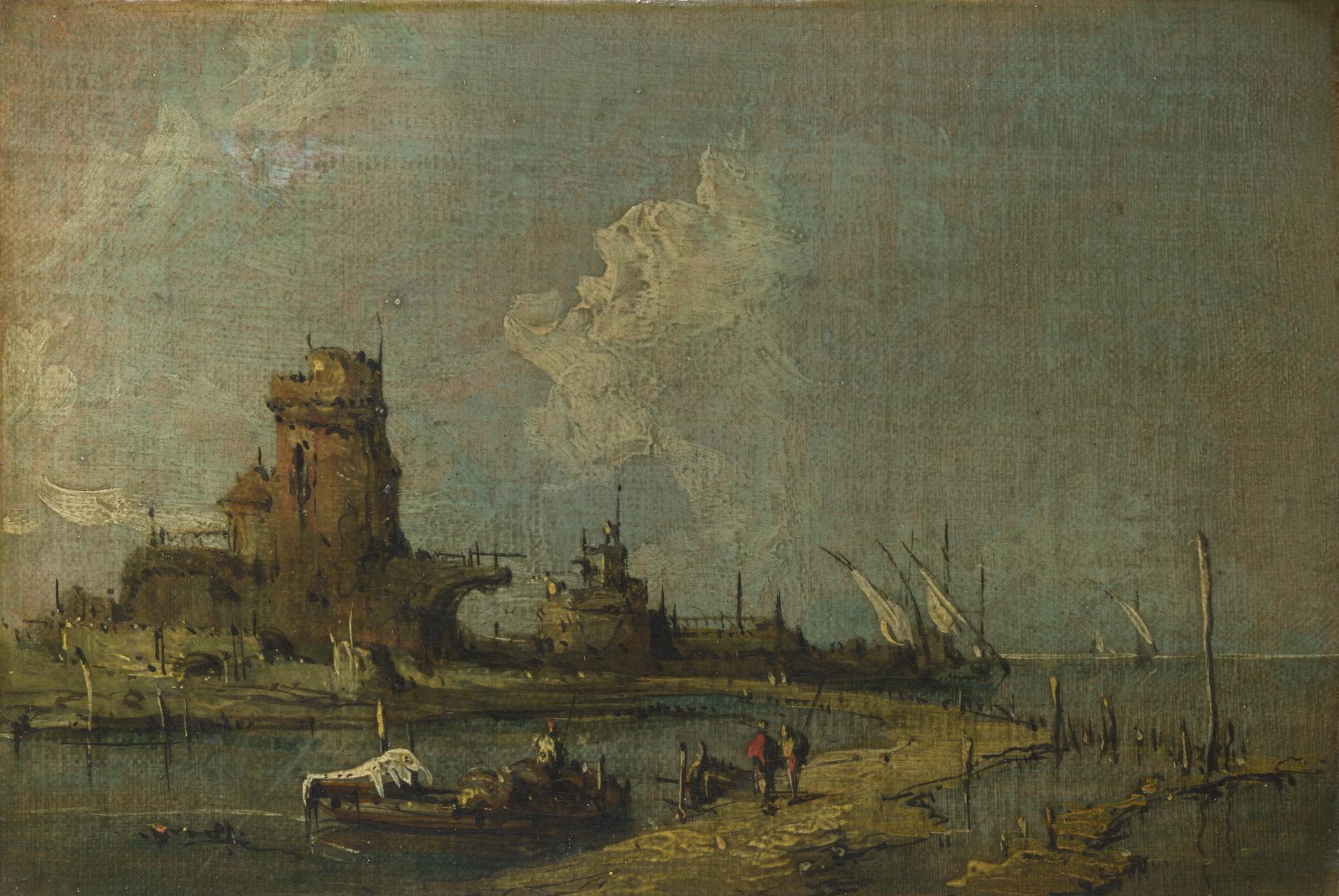
A Caprice with a Ruined Arch

- Artist: Francesco Guardi
- Date: about 1775
- Medium: oil on wood
- Museum: The National Gallery
- Collection record: The National Gallery website
Listen to the free audio guide
About this artwork
This is the "A Caprice with a Ruined Arch" by Francesco Guardi. Painted in about 1775, this work showcases Guardi's unique style and skill. The scene before you is an imaginary one, known as an acapriccio. However, it's not entirely invented - Guardi took inspiration from real-life buildings.
Notice the arch with a suspended lantern? It may have been derived from the arcade of the Doge’s Palace in Venice. Guardi exaggerated it slightly, which was typical for these kinds of scenes. The brushstrokes are fluid and loose, with thin paint layers adding to the dreamy effect.
The pen-like details on the buildings are striking, giving them a sense of definition and structure amidst the otherwise chaotic scene. It's no surprise that works like this were produced in large numbers by Guardi in his Venice studio during the late 1770s and early 1780s - they made perfect souvenirs for tourists visiting the city.
Oil on wood is the medium used here, creating a rich and textured surface. Take a closer look at the colors and textures - you'll find that each brushstroke has its own unique character.
See it in person
A Caprice with a Ruined Arch hangs in The National Gallery on Trafalgar Square, London — free to enter. Point your phone at any artwork there and audioguide.london plays a free audio guide in six languages — no app download needed.