A Fortune Teller at Venice

- Artist: Pietro Longhi
- Date: about 1756
- Medium: oil on canvas
- Museum: The National Gallery
- Collection record: The National Gallery website
Listen to the free audio guide
About this artwork
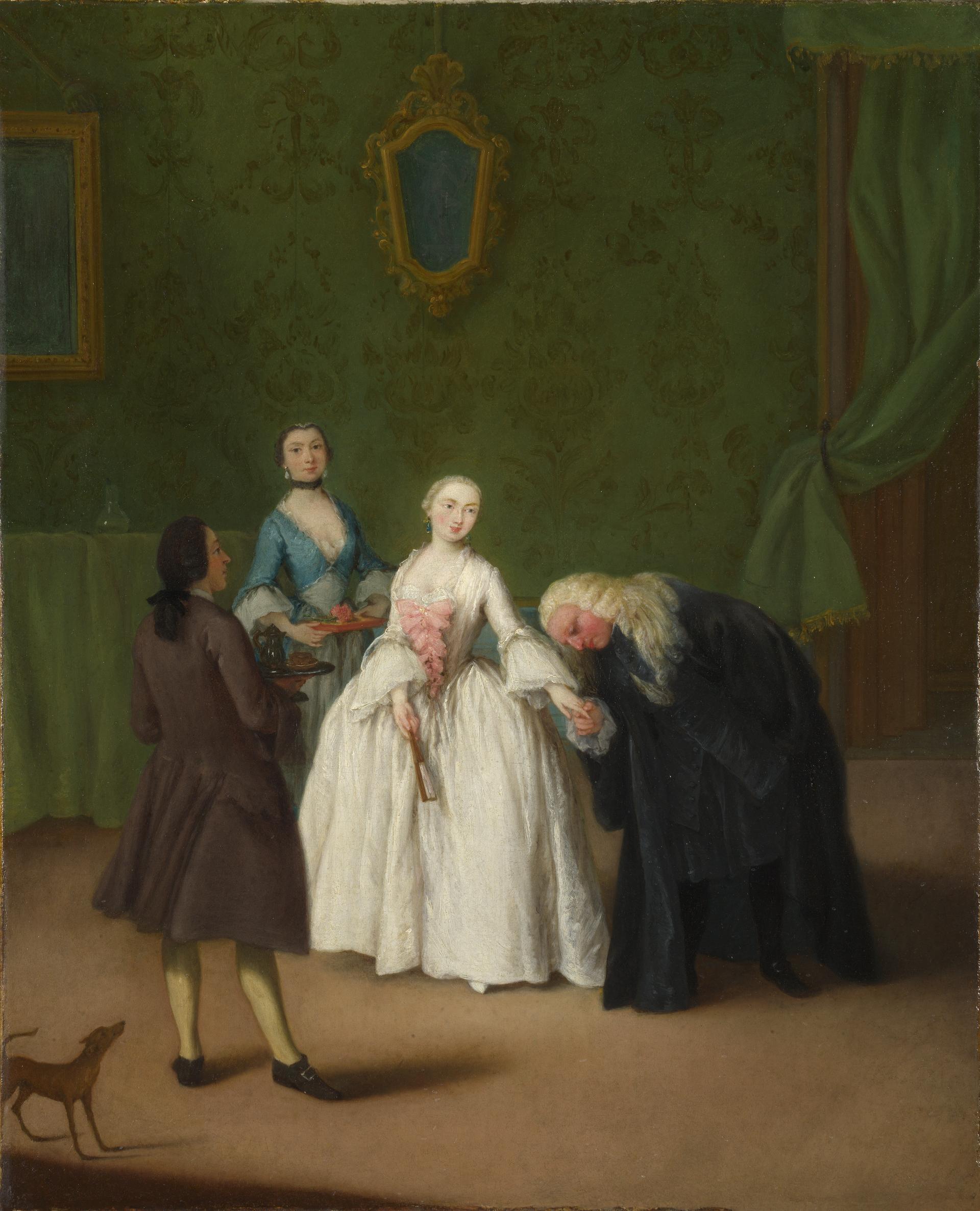
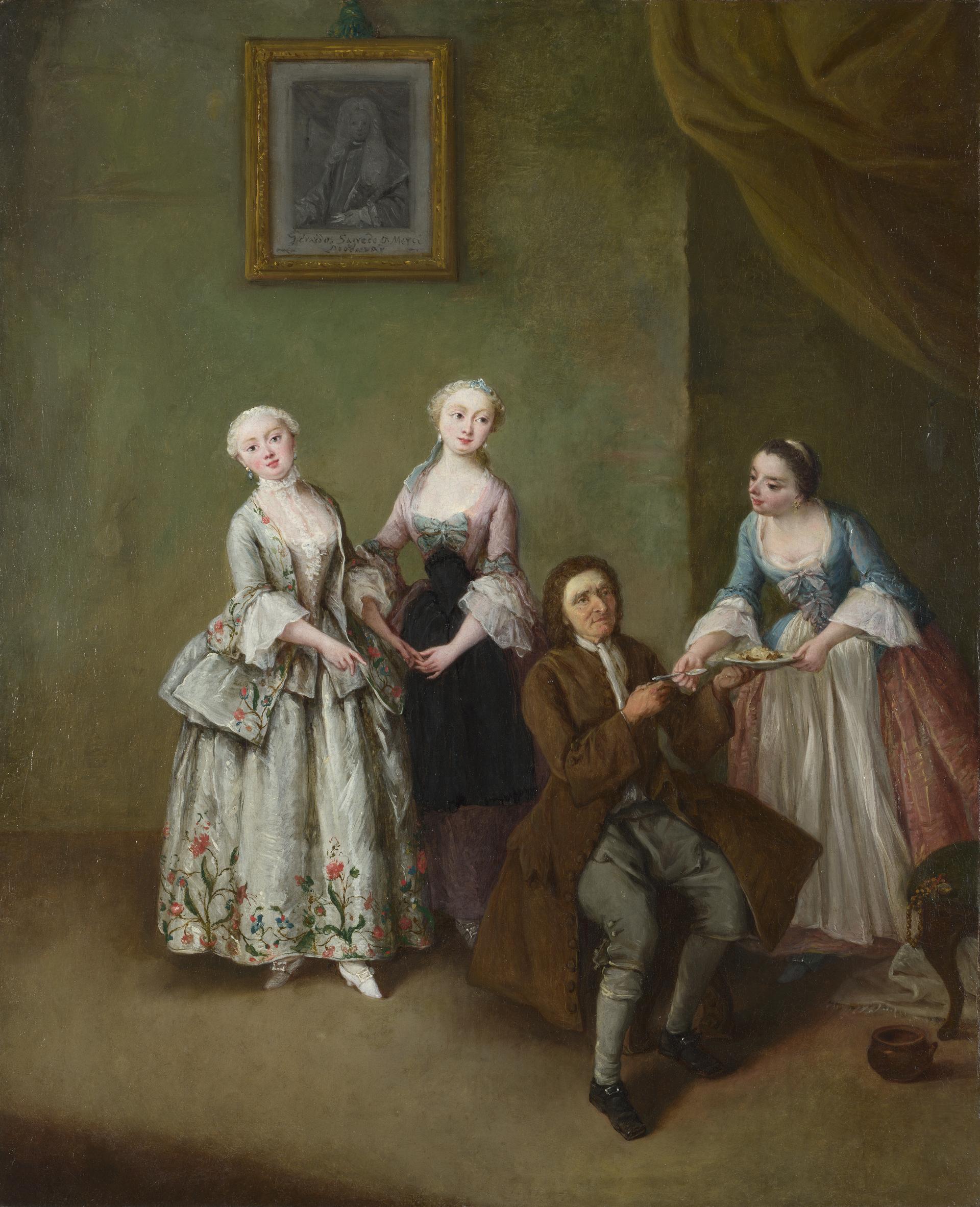
This is the "A Fortune Teller at Venice" by Pietro Longhi, painted in the Italian north around 1756. You'll notice a lively scene of Venetian Carnival, celebrated during the 40 days of Lent. The fortune teller is reading the palm of a fashionable lady; a fruit seller with a full basket stops to watch and a masked figure leans forward for a closer look. But one woman, however, stares intensely towards us.
Longhi has placed the scene in one of the arcades of the Doge’s Palace. Take a look at the inscription on that pillar - it probably refers to Francesco Loredan, who was elected Doge of Venice in 1752. And if you glance up at the wall behind, you'll see another inscription related to the election of a priest for the parish of San Trovaso.
Notice how the background is rather muted compared to the richly detailed foreground. The fortune teller’s embroidered skirt and her client's lace shawl and flowing dress all add plenty of patterns and textures to the scene. It's a great example of Longhi's ability to capture everyday life in Venice with such attention to detail.
See it in person
A Fortune Teller at Venice hangs in The National Gallery on Trafalgar Square, London — free to enter. Point your phone at any artwork there and audioguide.london plays a free audio guide in six languages — no app download needed.