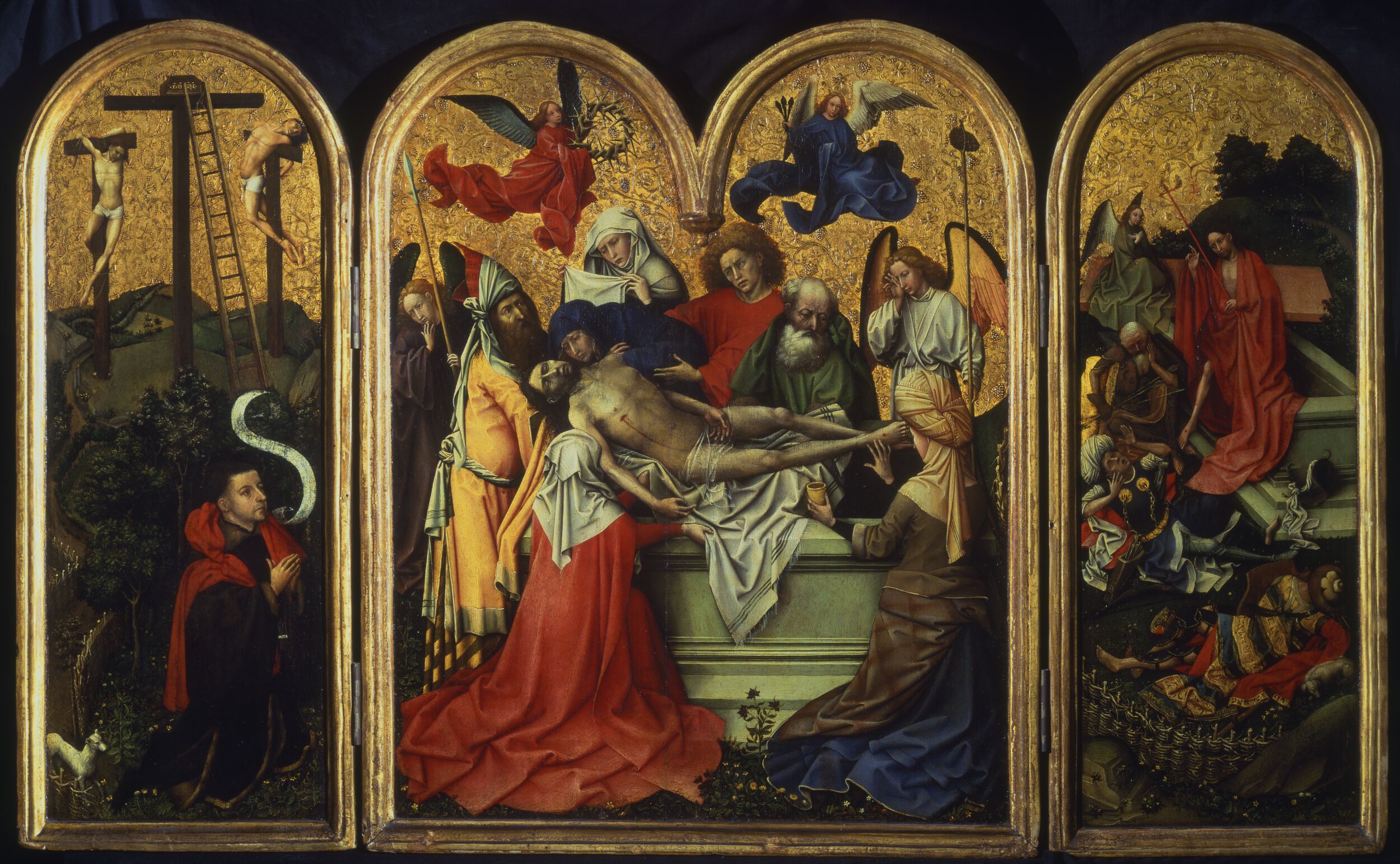
The Entombment (centre panel)
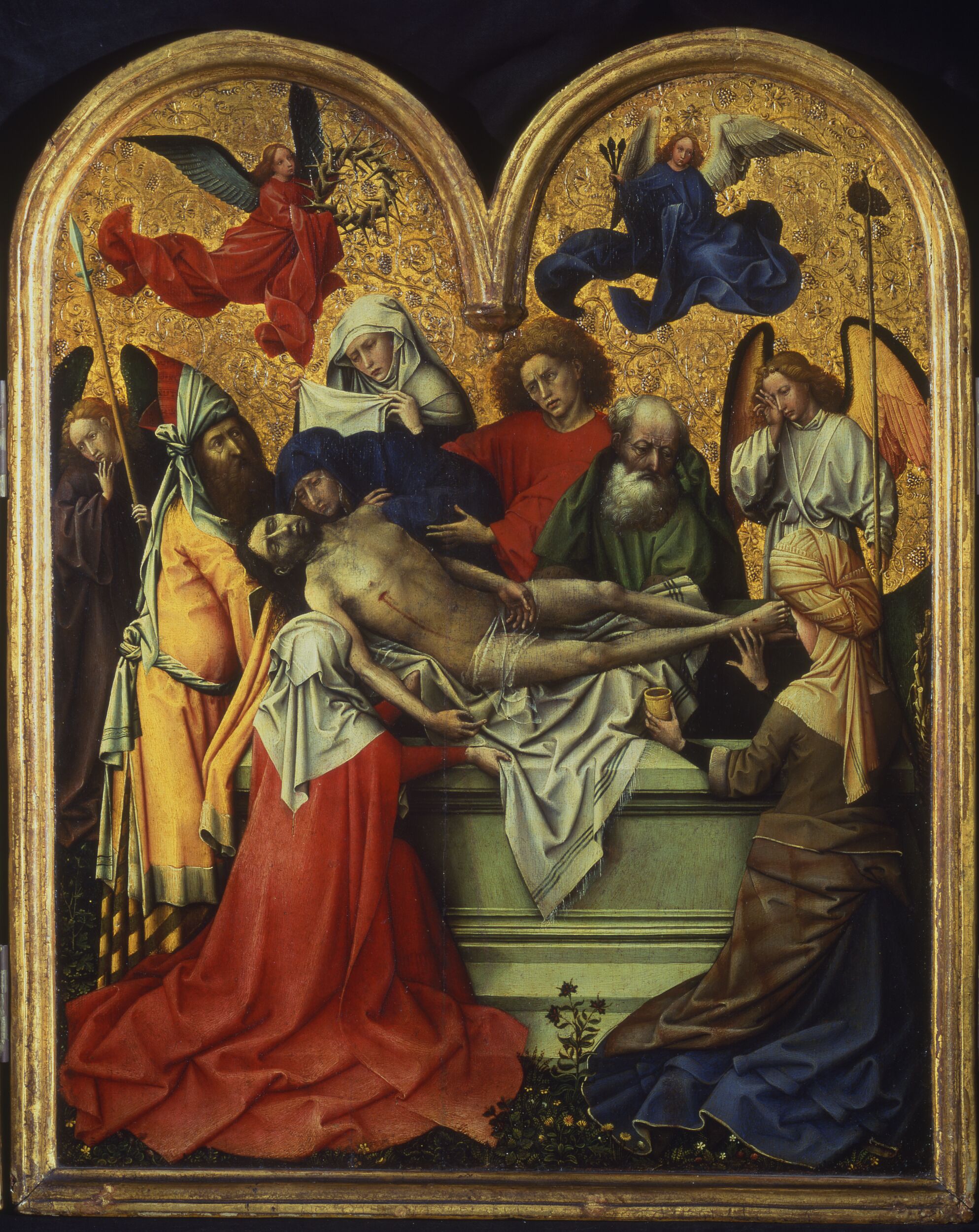
- Artist: Robert Campin
- Date: c. 1425
- Medium: unidentified paint surface and goldleaf on panel
- Museum: The Courtauld Gallery
- Collection record: The Courtauld Gallery website
Listen to the free audio guide
About this artwork
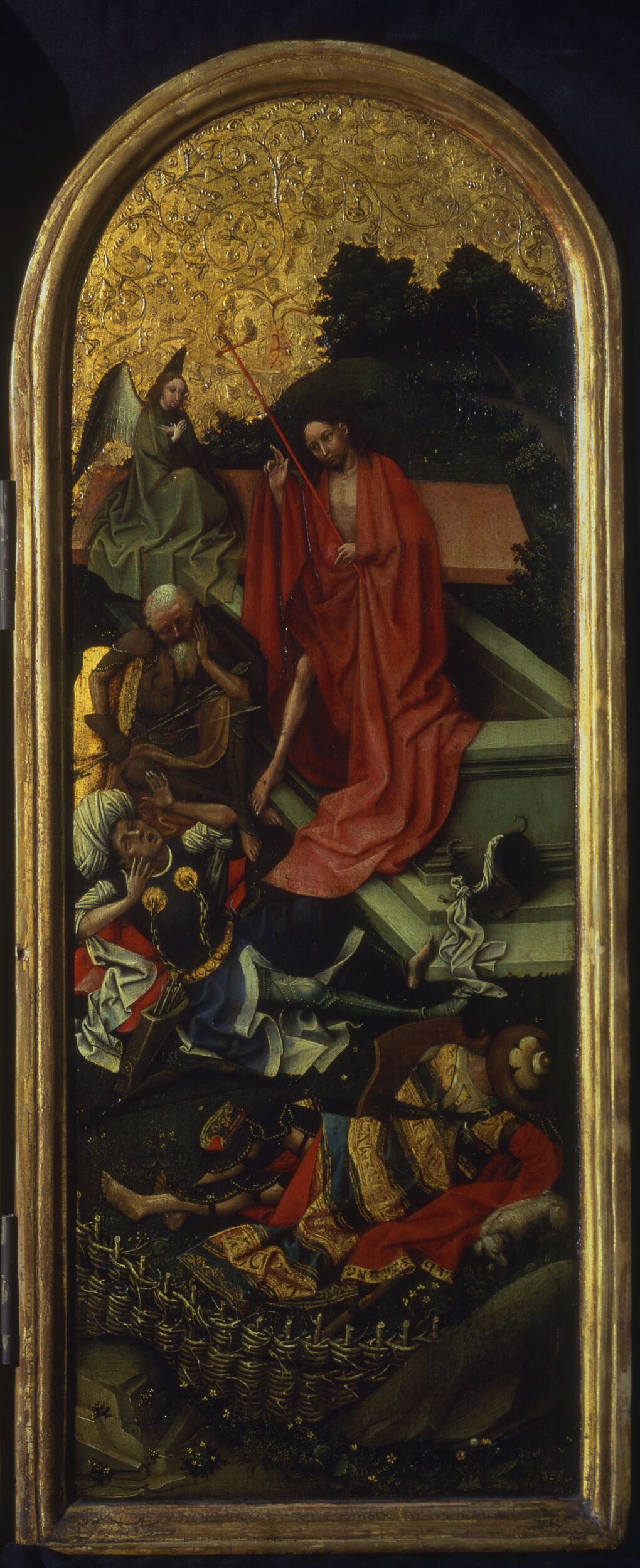
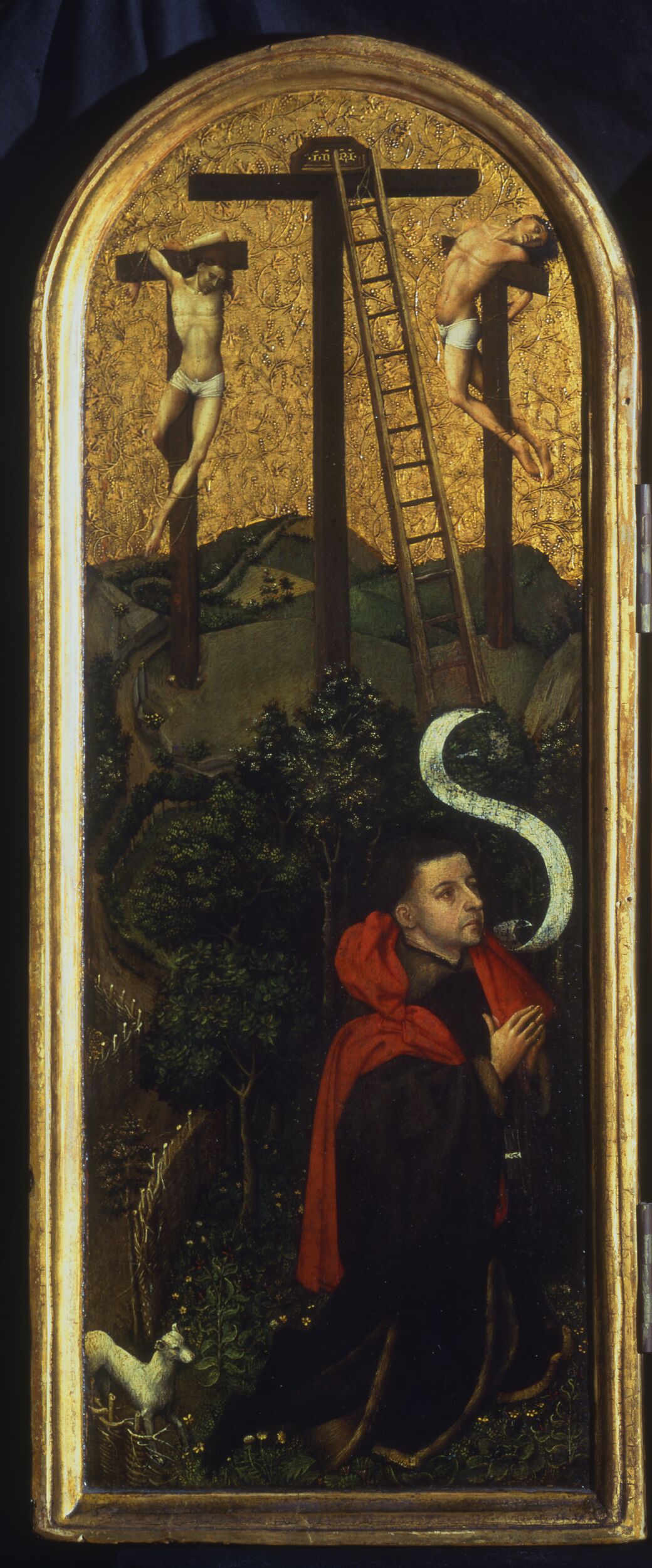
This is the “The Entombment (centre panel)” by Robert Campin. Created around 1425, it is a three‑panel triptych on an unidentified paint surface with gold leaf overlay. The central panel shows Christ’s burial after the Crucifixion, while the right wing moves forward to his triumphant Resurrection. The left panel houses an anonymous kneeling figure, likely the patron who commissioned the work for private devotion.
What makes Campin’s work stand out is his early adoption of oil paint. Unlike tempera, oil allows pigments to remain translucent and to dry slowly, giving the artist room to layer subtle light effects. This technique gives the figures and objects a strikingly lifelike immediacy. The panels are packed with exquisite details—every leaf, bone, and cloth rendered with careful observation.
The background is a shimmering gold leaf tapestry, decorated with raised motifs that add texture. Among them is a grapevine in the central panel, a symbolic reminder that the wine of the Crucifixion’s blood foreshadows the Resurrection. Campin, a leading painter in Tournai (modern Belgium), used these elements to weave narrative, symbolism, and devotional purpose into one cohesive visual story. The piece remains a benchmark for early Northern European art, showcasing how new materials could elevate storytelling on panel.
See it in person
The Entombment (centre panel) hangs in The Courtauld Gallery at Somerset House, London. Point your phone at any artwork there and audioguide.london plays a free audio guide in six languages — no app download needed.